
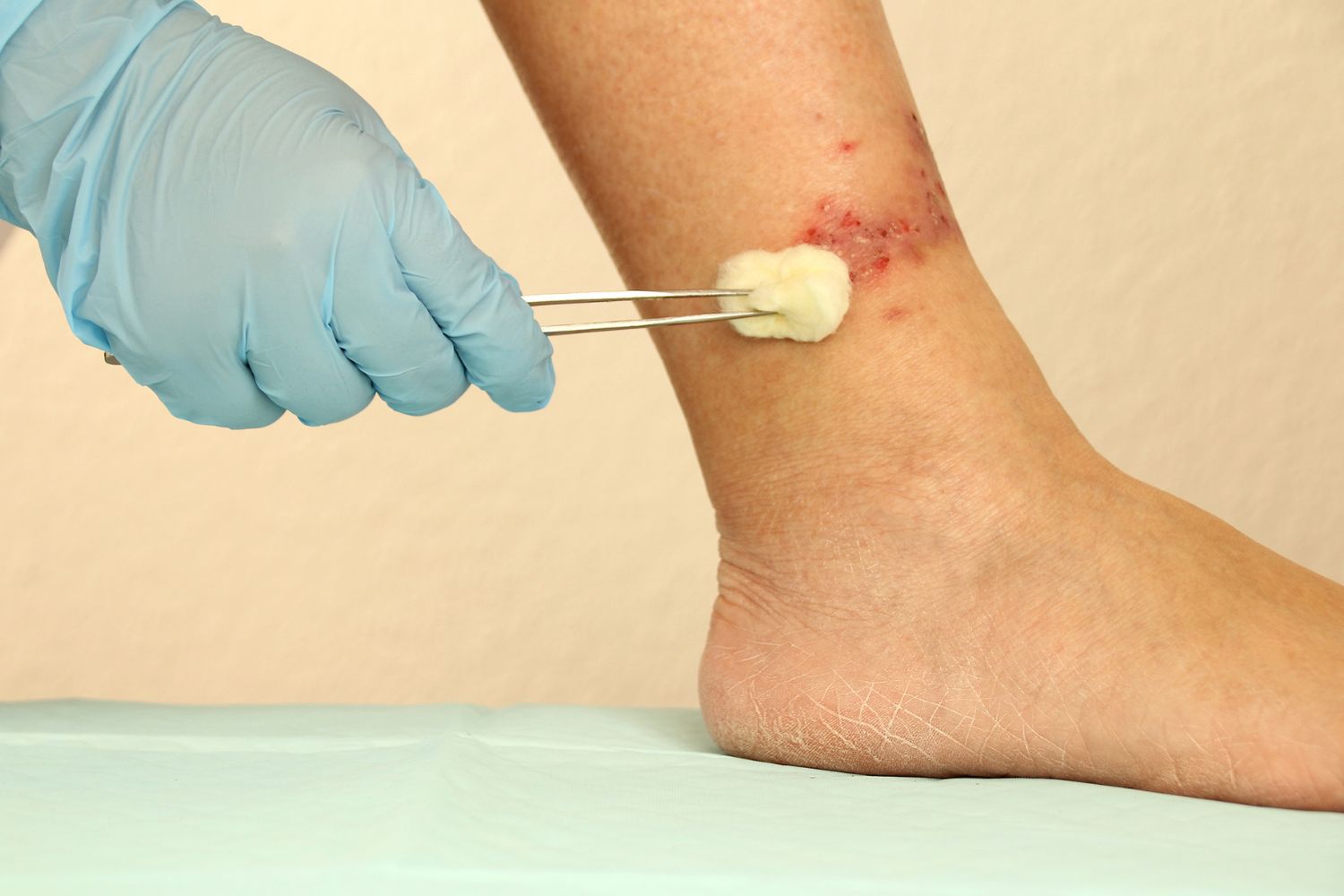
There are so many reasons that a patient could develops an open wound of the lower limb. Of course, the chances of developing leg ulcers could increase with age (arterial disease). Some other causes of leg ulcers are:
- Venous insufficiency, stasis and personal history of deep vein thrombosis
- Lower limb ischemia, due to the poor circulation
- Diabetes, due to peripheral neuropathy (sensory and motor) and diabetic angiopathy
- Post-traumatic
- Lower limb lymphedema
- Pressure injury (heels and ankle in bedridden patient)
- Burn
- Autoimmune diseases (such as scleroderma, rheumatoid arthritis vasculitis)
Furthermore, varicose veins, which are swollen and visible veins, are frequently connected with leg ulcers. Although leg ulcers are often a complication of untreated varicose veins, this is not always the case.
Usually the Symptoms of leg ulcers could be redness, purple, brown or yellow (or a mix of colors) of the bed of the wound and the skin all around. Nonhealing sores on your legs often seep (ooze fluid or pus) and can grow larger if left untreated. A sore on the leg that doesn’t heal after four weeks of treatment is considered a chronic condition.
Other signs of a leg ulcer include:
- Dry, scaly or itchy skin
- Hard bumps on the skin or hardened skin
- Leg pain, especially after standing for a while
- Red, blue or purplish skin color (like a bruise)
- Swelling (edema) in the lower legs
The treatment of the leg ulcers is crucial. The scope is to relieve the pain, to prevent the infection, and to stop the wound from growing in size. The treatment is linked with the diagnosis (usually it is necessary to have further investigation, like eco color doppler ultrasound, blood test, radiology test and cultural swab). It could be required to treat infections with antibiotics to avoid further complications, in case there is clinical sign of infections.
Compression bandages are also used to help ease swelling, close the wound, and prevent infection. Your doctor may also prescribe an ointment to apply to the ulcer.
In some cases, the doctor may order orthotics or braces to help you walk better (especially in diabetic foot ulcers) while preventing future ulcers. They may prescribe a medicine to improve the circulation in the legs or to prevent blood clots in the venous system.
These wounds are also more common in women, but they can affect both men and women of any age. However, if you treat them early and properly, leg ulcers can improve without causing any further complications.